
How is packaging designed? A guide to the process and pricing
 Abdullah Şahan 6 min read
Contents⌄
How is professional packaging designed, and what determines the price? This article covers everything you need to know, from strategy to the printing process.
The first three seconds when a product meets a shopper on the shelf decide the fate of months of R&D and production. The core approach I've developed over 11 years in design is this: packaging isn't a simple wrapper that protects your product. It's your most powerful marketing investment, conveying the product's story, quality and promise.
Good packaging design needs more than aesthetics. It has to be built to eliminate technical risks in production, work flawlessly with the printer and, ultimately, drive sales. Let's take a look at how I structure this multi-layered process, which I manage through direct, boutique-style communication rather than cumbersome agency procedures.
Working out the product's market identity
Before starting on the design, we need to define the product's character on the shelf. Will it compete in the economy segment, or will it create a premium impression? When shoppers see this packaging, should they feel trust or energy? What is the core promise that sets you apart from your competitors (additive-free ingredients, high nutritional value, dermatological approval, etc.)?
These strategic questions are the main compass that guides the design's colour palette, choice of materials and typography.
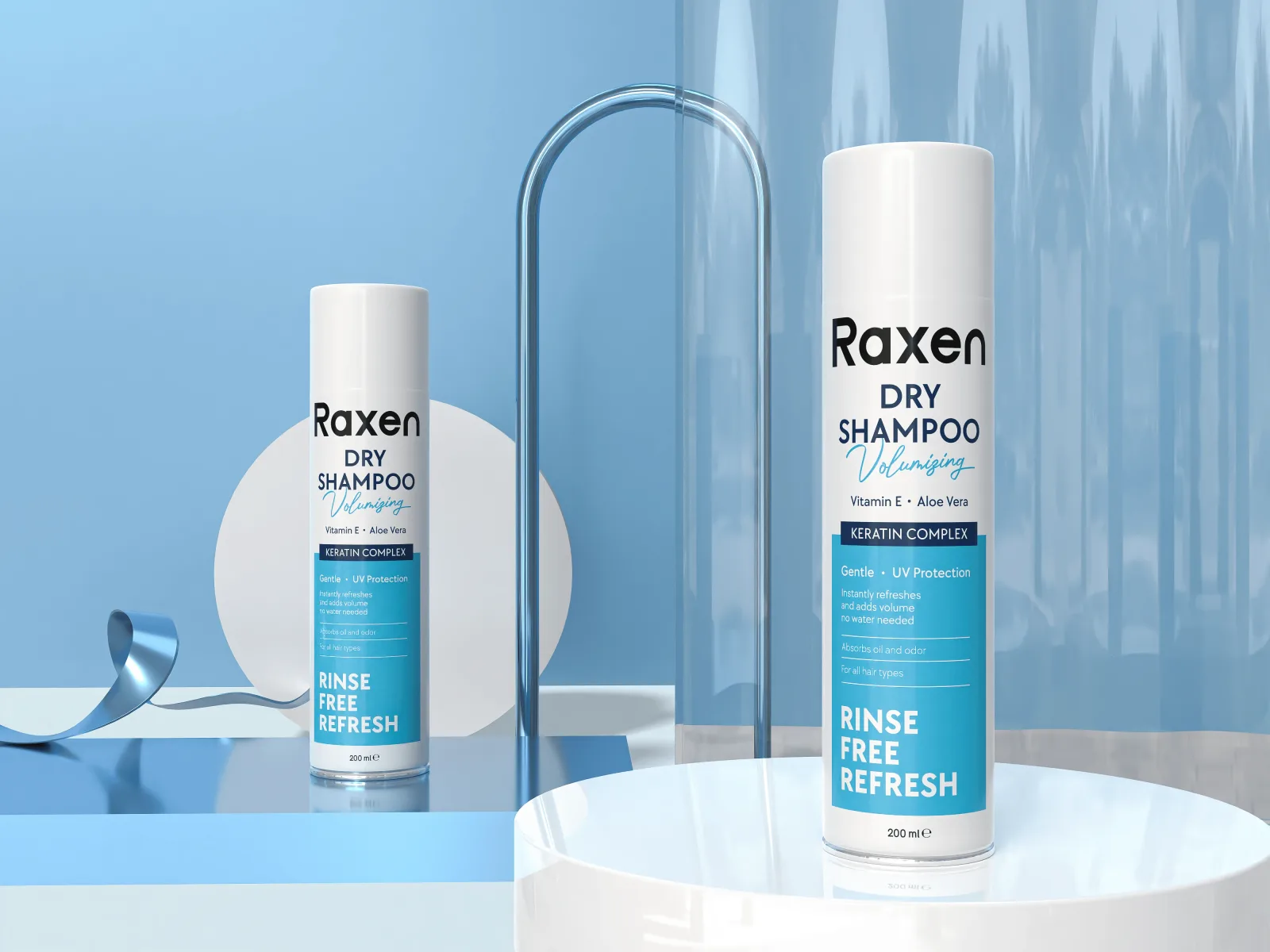 Case Study
A premium cosmetics feel with a clean palette and a clear label
For the Raxen dry shampoo and care range, I built a premium cosmetics positioning that inspires trust on the shelf, with a clean blue and white palette, a strong brand logo and a readable label hierarchy.
Explore the Raxen ProjectThe dieline file
A design that looks great on screen means nothing if it doesn't fold properly at the printer's or doesn't sit exactly on the dieline.
The technical drawing that sets the physical boundaries of the box, doypack or label your product will go into (the dieline) is prepared by the printer that will produce the packaging. I take over this technical template from your printer and build the entire design within its boundaries. This way, the risks that could arise at the printing stage are removed completely.
In the Noire coffee range, handling coffees of different origins with one versatile doypack template and telling them apart with labels made both production and costs noticeably easier to manage.
Removing surprises with 3D modelling
When it comes to approving a design, I don't like leaving things to the imagination. Rather than showing my designs as flat images, I present them using 3D modelling technology, which shows exactly how the product will look on the shelf once it goes into production. I create photorealistic simulations of the material's texture, the way light reflects off the surface and the gloss and lamination details. That way, you can approve production with complete peace of mind and there are no surprises.
You can click the packs below and try rotating them yourself :)
Click any packaging design to open an interactive 360° viewer and rotate the actual model.
Managing information (visual hierarchy)
A shopper in a supermarket has very little time to look at a product, so the packaging has to speak very clearly. An uncluttered information hierarchy is a must for the design.
- Brand recognition: The eye should recognise the brand first.
- Category clarity: It should be clear within seconds what the product is.
- Core promise: The main message that supports the decision to buy (high protein, gluten-free, etc.) should be visible straight away.
- Legal and product details: Nutrition information, ingredients and the barcode should appear on the back, legible and compliant with the standards.
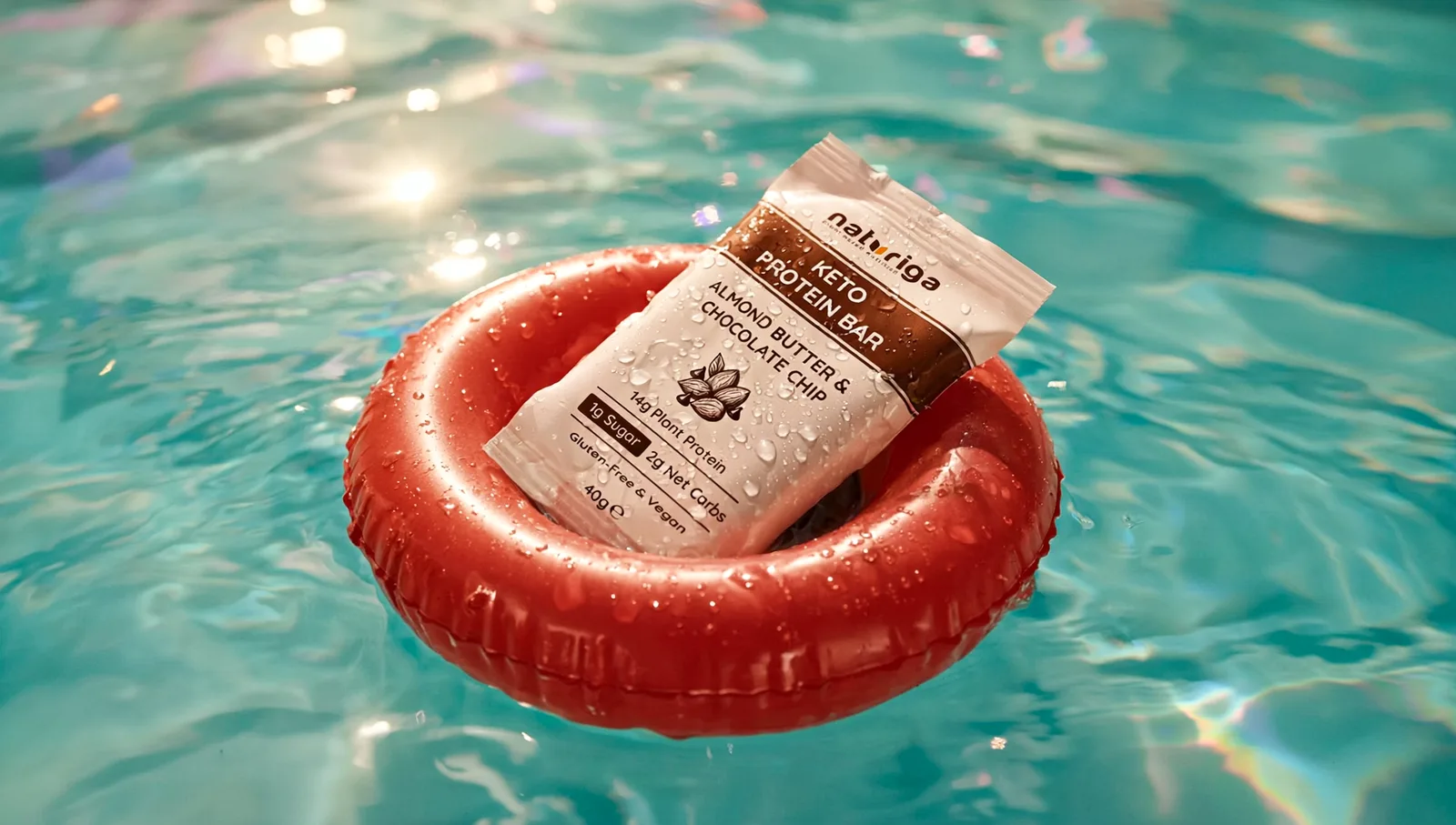 Case Study
A healthy snack with a strong information hierarchy
For the Naturiga keto protein bar range, I built a clear information hierarchy. The eye reads the brand first, then the product type and flavour, then the nutritional details (protein, low sugar, gluten-free), in that order.
Explore the Naturiga Project
Abdullah Şahan
Graphic Designer & Software Developer · Founder of Şahan Design
If you want to strengthen your business's digital presence, I'm ready to help.
Colour discipline and print preparation (prepress)
Your colours are the strongest carrier of your brand identity. To make sure the colour approved on screen comes off the press without shifting, I use correctly calibrated CMYK values or your brand's Pantone codes in the design.
Just before the design goes to the printer, the bleed, the vector sharpness of the text and the readability of the barcode go through a final technical check, so that nothing goes wrong at the cutting stage. A single mistake at this point can mean paying for the entire print run again.
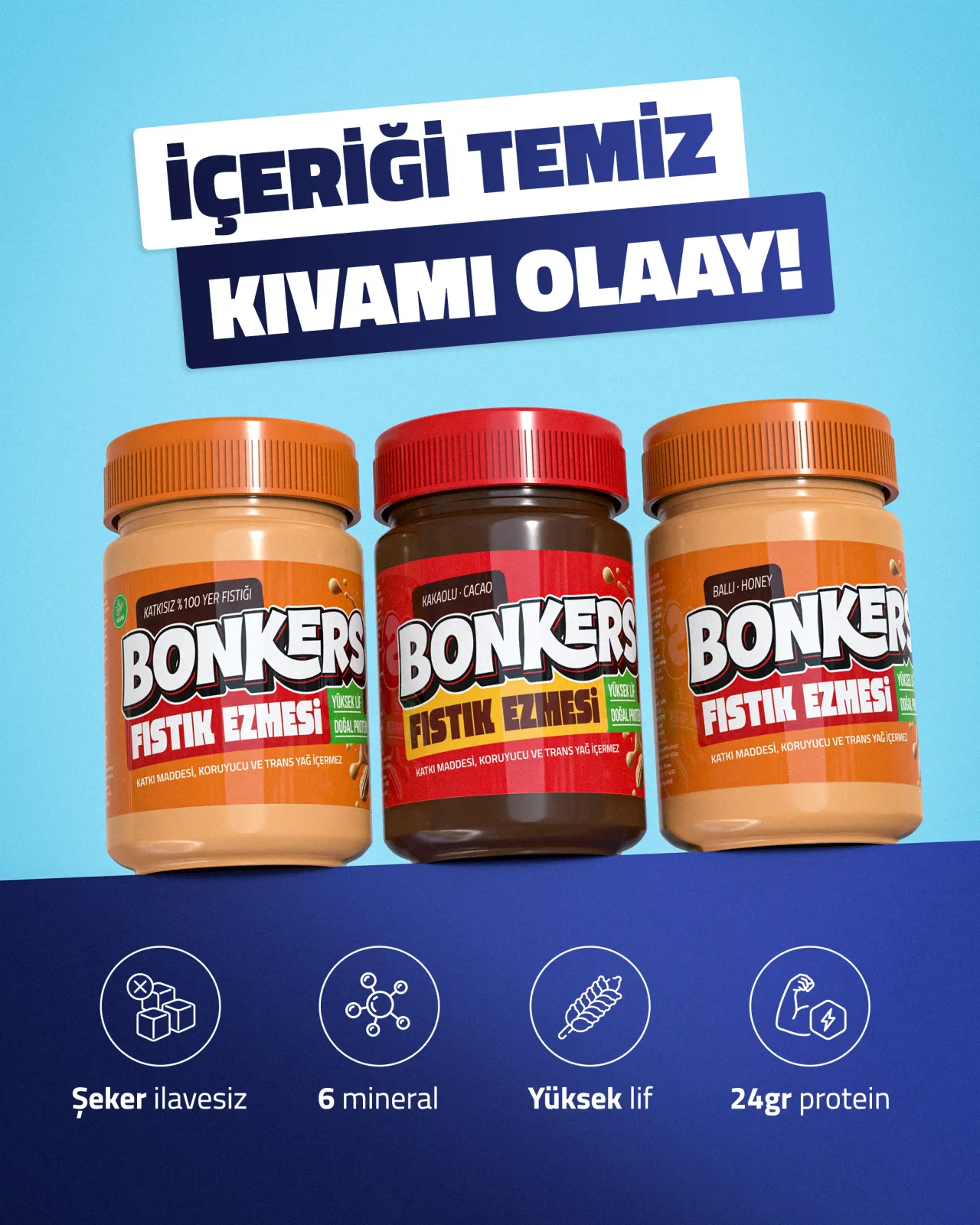 Case Study
Bold colours that form a strong block on the shelf
For the Bonkers peanut butter range (classic, cocoa, honey), I used bold colour contrasts and strong typography. When the jars sit side by side on the shelf, they form an eye-catching, cohesive block.
Explore the Bonkers ProjectDigital visibility and e-commerce
Today, packaging is often sold in a digital shop window before it reaches a physical shelf. So the design has to get the brand and its core promise across clearly, even when it appears as a tiny image on a phone screen. Before the product is even printed, I stage it in 4K-quality renders and get it ready for e-commerce and social media.
How is packaging design priced?
As with every step of the process, I use a clear and transparent system for budgeting. Packaging design prices are based on two components that accurately reflect the workload:
1. Main design (concept): This is where the real work happens, and it's the most intensive stage. Building the brand strategy, market analysis, creating the design to fit the dieline supplied by the printer, choosing colours and typography and the first round of 3D modelling all take place at this stage. It forms the project's base budget and is priced only once.
2. Variation design (derivatives): Once the main concept is approved, this is the process of adapting it for the product's different flavours (strawberry, banana) or weights (100 g, 500 g). Because the design language is already in place, only colour adjustments and changes to the content and barcode are made. This component is priced at a fixed, more affordable unit rate.
Total budget = (1 main design fee) + (number of variations × fee per variation)
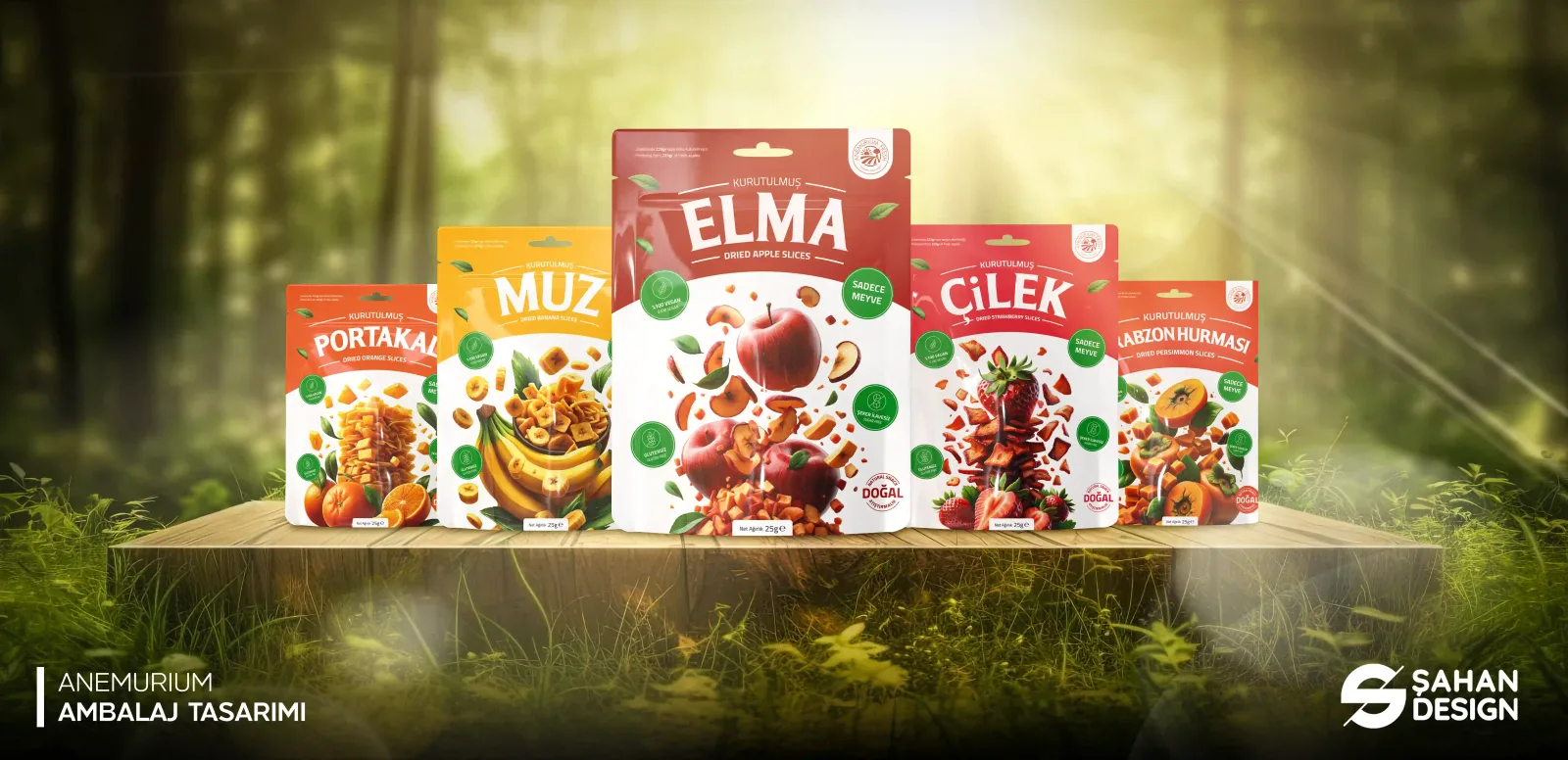 Case Study
Five fruit variations derived from one main design
For the Anemurium dried fruit range, one comprehensive main doypack template was designed. Apple, banana, orange, strawberry and persimmon were then produced as "variation designs" derived from the same design language. It's the clearest example of how the pricing takes shape.
Explore the Anemurium ProjectFor pricing tailored to your project, you can get a free quote in a few steps.
Secure your place on the shelf
Effective packaging design is a multi-layered discipline that combines aesthetics, technical skill and marketing strategy. Done properly, it doesn't drain your budget. It pays you back by multiplying your sales.
If you have a packaging design project in mind, you can get in touch with me for a direct process with no middlemen and find out more about how it works. If you'd like, you can explore my packaging design service, and if you're building a brand from scratch, you can also have a look at my logo design and brand identity design services.
Related service
You can find current packages and starting prices on the service page.


